Recovery Tech Basics
You’ve probably seen every gadget under the sun promising “faster recovery” and “limitless energy.” Most of it is noise. What you actually need are a few tools that change what’s happening inside your muscles, mitochondria, and nervous system—not just more stuff cluttering your routine. This guide cuts straight to the recovery tech that’s worth your attention: red light therapy, cold plunges, and a handful of smart stacks that help you bounce back faster without living in your recovery room.
How Red Light Therapy Helps Your Body Repair
Most people first hear about red light therapy from a marketing claim: “better recovery,” “more energy,” “anti‑aging,” “fat loss,” and so on. Underneath the hype is a real mechanism called photobiomodulation—red and near‑infrared light acting on the energy factories inside your cells.
The Simple Version of a Complex Mechanism
Inside almost every cell you have mitochondria, which you can think of as tiny power plants. Their job is to turn fuel into ATP, the energy currency your cells use for repair and function.
Red and near‑infrared light, usually in the 630–670 nm and 810–850 nm ranges, can be absorbed by an enzyme in the mitochondrial electron transport chain called cytochrome c oxidase.
When that happens, three useful things follow:
It helps clear nitric oxide that can clog up that enzyme under stress.
The electron transport chain runs more efficiently.
More ATP gets produced, and cells have more energy to repair, remodel, and communicate.
In human terms, that means targeted red light can help:
Reduce post‑exercise muscle soreness (DOMS) and speed strength recovery.
Support wound and tissue healing in certain contexts.
Modulate inflammation and oxidative stress over time.
It’s not magic; it’s light helping your cells do what they were already trying to do.
What the Evidence Actually Supports for Recovery
When you strip away marketing, the research on red light therapy and recovery is fairly consistent on a few points:
Applied before or after hard exercise at appropriate doses, photobiomodulation can
reduce the severity and duration of muscle soreness
improve strength recovery 24–72 hours later
improve performance metrics in some protocols
Benefits are moderate but real—you still feel that you trained, but you tend to bounce back faster and feel less wrecked.
It has a strong safety profile when used within reasonable dosing windows.
On this page, that’s the central promise: red light won’t replace sleep, nutrition, or smart programming, but it can meaningfully support recovery when used correctly.
How to Use a Home Device Without Overthinking It
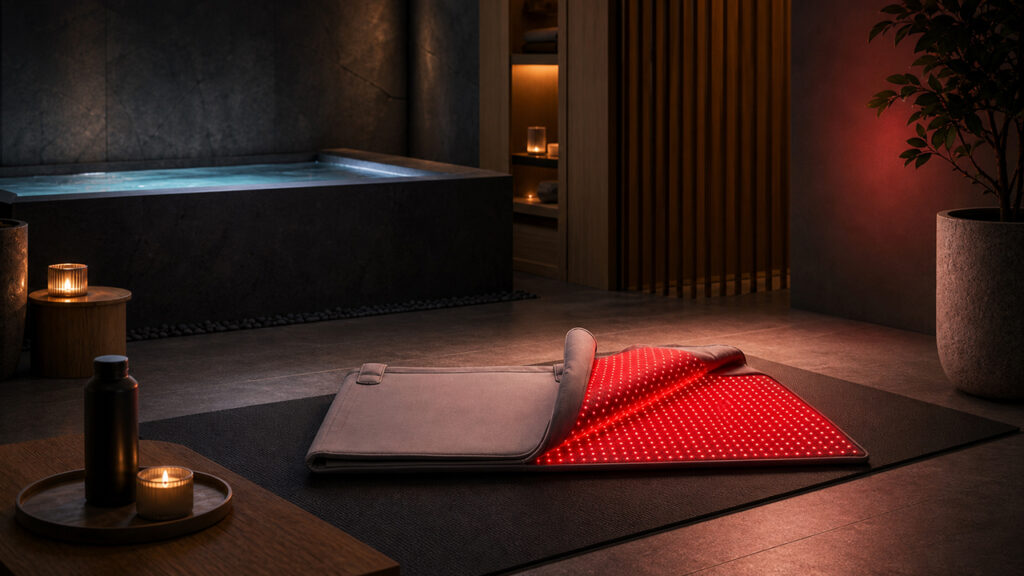
Home devices like NovaaLab and similar panels or pads give you the ability to target specific areas—knees, shoulders, low back, or larger muscle groups.
A simple starting framework:
Frequency: most people start at 3–5 sessions per week for areas that get used heavily.
Timing:
30–60 minutes before training to pre‑condition muscles.
Or within a few hours after training to support recovery.
Distance & time: follow the device’s instructions, but many panels use
6–18 inches away
about 5–15 minutes per area depending on power density.
The safest rule: keep sessions short, consistent, and targeted, and treat red light as a support tool, not a license to ignore the basics.
You can then introduce your recommended device naturally, for example:
“If you want a practical home option, we like [Your NovaaLab device affiliate link] because it targets joints and muscle groups without taking over your whole room.”
Cold Plunge: What the Ice Bath Is Actually Doing
Cold plunges are everywhere—gyms, backyards, TikTok. Some people treat them like a miracle cure; others write them off as masochism. The reality sits in the middle.
Used intelligently, cold immersion can:
Reduce soreness and inflammation after hard efforts
Improve mood, alertness, and stress resilience
Support better sleep in some people
Train your blood vessels and nervous system to handle stress more gracefully

What Happens to Your Body in the Cold
When you step into 39–55°F water, a few things happen very quickly:
Blood vessels constrict, shifting blood from the skin and limbs toward the core.
Inflammation markers drop, at least temporarily, which can relieve soreness.
Your sympathetic nervous system ramps up, leading to that sharp, awake feeling.
Over time, repeated exposure can train your cardiovascular system and may activate brown fat, which uses energy to generate heat.
You can explain it like this:
“Cold is controlled stress. You’re teaching your body and brain: ‘We can feel intense discomfort without panicking, and we know how to come back to baseline.’”
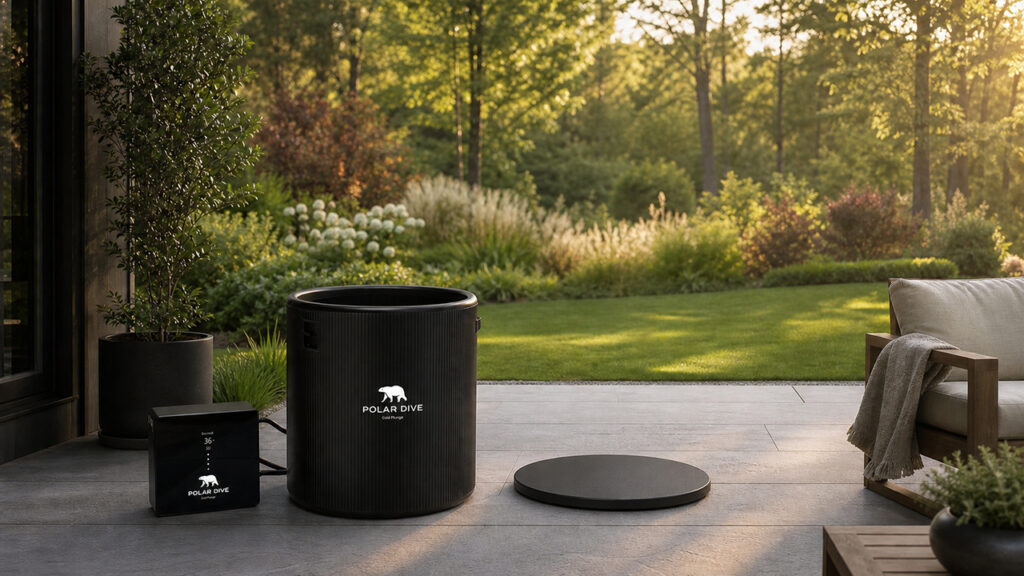
That’s where a higher-ticket system like Polar Dive fits in. It makes that stress repeatable, controllable, and hygienic compared with a trash can full of melting ice.
Timing Matters: When Cold Helps and When It Gets in the Way
The biggest mistake lifters make is jumping straight into a cold plunge right after heavy strength work. Research suggests that doing intense cold immediately after training can blunt some of the hypertrophy and strength adaptations you’re trying to build.
Safer rules of thumb:
If your focus is strength or muscle gain, don’t hit cold plunge right after lifting.
Save it for rest days, light days, or at least several hours after training.
If your priority is soreness relief, mood, and resilience, short plunges (2–5 minutes) at 10–15°C / 50–59°F a few times a week can be plenty.
If you use heat (sauna) and cold together, a common pattern is:
Heat (10–20 minutes) → short cold plunge (2–5 minutes) → gentle recovery period.
For this page, you can frame Polar Dive as:
“If you want a home setup that holds temperature, stays clean, and doesn’t require hauling ice bags, [Polar Dive affiliate link] is our current favorite. It makes consistency realistic instead of a weekend stunt.”
Simple Recovery Stacks You Can Actually Follow
Tools only matter if you can fit them into a normal schedule. Below are simple “stacks” you can describe without turning the page into a protocol textbook.
Strength Day – Protect Gains, Ease Soreness
Goal: keep adaptations, reduce soreness, sleep better.
Train as usual.
Later in the day (or the next day):
Targeted red light session on the main muscle groups you hammered (5–15 minutes per area).
Light walk, stretching, and normal bedtime routine.
Skip the cold plunge right after lifting; save it for a rest or low‑intensity day.
This is where a localized device like [NovaaLab pad or panel affiliate link] makes sense—direct light to the muscles or joints that did the most work.
Recovery Day – Sauna + Cold + Light
Goal: fast “reset” when training load, work, and life stack up.
Infrared sauna or hot shower for 10–20 minutes to raise body temperature and promote circulation.
Cold plunge: 2–5 minutes in 50–59°F water (scale by tolerance), focusing on calm breathing, not heroics.
Red light session: after you’re dry and warm, a short panel session for general recovery and relaxation.
You can position your devices here as a “home recovery corner”: sauna or heat source, Polar Dive tub, and a NovaaLab panel or pad in the same area.
Sleep and Nervous System Reset Stack
Goal: better sleep quality and stress recovery, especially during busy periods.
Light evening walk or stretch.
Short red light session in the early evening, aimed more at general relaxation and circadian support than performance.
Optional cool shower instead of full plunge if your nervous system feels wired. Full cold plunges are better earlier in the day for most people.
Remind readers that wearables and symptoms are feedback. If HRV tanks, resting heart rate stays elevated, or motivation crashes, they’re doing too much—even if the tools themselves are “healthy.”
Other Recovery Tools Worth Knowing About
Not everything needs a tub or a panel. You can briefly cover a few supporting tools and point to Amazon or other partners here.
Compression, Massage, and Sleep Support
Short, factual mentions:
Massage guns and compression boots: help with local circulation, perceived tightness, and relaxation, but are not core recovery tools by themselves.
Sleep tech: basic trackers or alarms that help people protect 7–9 hours of high‑quality sleep often outperform more exotic gadgets.
Supportive supplements: magnesium, electrolytes, and basic joint support can be helpful if diet is lacking, but they sit under sleep, nutrition, and load management.
Each can carry one low‑key affiliate recommendation inside a sentence rather than as a sales paragraph.
How to Prioritize Recovery Tech Without Wasting Money
It’s easy to build a very expensive recovery room that doesn’t actually fix your problem. This section should protect the reader from that.
You can lay out a simple priority order:
Fundamentals first: sleep, nutrition, smart programming, and stress management are non‑negotiable. Tools don’t replace these.
Then one primary tool: if you’re always sore and train hard, start with red light; if stress and mood are bigger issues, start with a cold setup you’ll actually use.
Then stacking: only once the first tool is a habit should you consider adding another.
You can end with guidance like:
“If your budget allows one major upgrade, choose the tool that you’re most likely to use three times a week for the next six months. Consistency beats the perfect theoretical stack every time.”
FAQs – Wellness Tech & Recovery
Does red light therapy really work, or is it just marketing?
Red light therapy (photobiomodulation) is not magic, but it is not placebo either. Research shows that specific red and near‑infrared wavelengths can improve mitochondrial efficiency, increase ATP production, and reduce markers of inflammation and muscle damage when used correctly. The strongest human data is for reduced soreness and improved strength recovery after hard exercise, not for extreme “biohacking” claims.
How often should I use a home red light device?
Most protocols for recovery use red light 3–5 times per week, applied before or after training to the muscles or joints you want to support. Short, consistent sessions at the right distance are more effective than occasional marathon exposures.
Are cold plunges safe for everyone?
No. Cold immersion is generally safe for healthy people who build up gradually, but it can be risky for anyone with cardiovascular, respiratory, or certain metabolic conditions. People with heart disease, uncontrolled high blood pressure, arrhythmias, or Raynaud’s phenomenon should speak with a clinician before attempting plunges, and everyone should start conservative with time and temperature.
How long should I stay in a cold plunge?
For most people, 2–5 minutes in the 50–59°F (10–15°C) range is plenty to get benefits without overdoing it. More isn’t automatically better; if you get numb, shiver uncontrollably, or feel “off” afterward, you went too far.
Should I use cold plunges right after lifting?
If your main goal is building strength or muscle, it’s better not to plunge immediately after heavy lifting, because intense cold right after training may blunt some muscle‑building adaptations. Use cold on rest days, light days, or later in the day instead.
Which should I buy first: a red light device or a cold plunge?
If you’re constantly sore and care most about performance and joint health, a red light device is usually the more targeted first purchase. If stress, mood, and resilience are bigger issues—and you know you’ll use it—a cold plunge or structured cold setup might be the better starting point. In both cases, your consistency matters more than the exact brand.