Daily Gut & Brain Support That Actually Fits Your Life
If your gut is off, everything feels harder. Meals sit heavy, focus slips by mid‑morning, and “normal” energy becomes something you chase with caffeine all day.

Most people try to fix this with random supplements and another new coffee trend. The smarter move is to build a simple daily stack that supports your microbiome, your brain, and your stress response at the same time, then layer products into that system instead of guessing.
This page shows you how to do that using three pillars:
Gut basics you can control every day
Mushroom coffee and morning rituals for smoother energy
Targeted nootropics and troches for focus, calm, and sleep
Along the way, we’ll point out where products like RYZE, gut‑support formulas, and Troscriptions’ troches can fit if they make sense for you.
Your Gut Is the Foundation for Daily Energy and Mood
Before you think about mushrooms or nootropics, you need a reasonable gut foundation. If digestion is a mess, your stack will always feel patchy.
A Quick, Friendly Version of the Microbiome
Your gut is home to trillions of microbes—bacteria, fungi, and other tiny organisms—that help you:
Break down food and extract nutrients
Produce short‑chain fatty acids that feed your gut lining
Help train and regulate your immune system
Communicate with your brain through the gut–brain axis
Our Daily Gut & Brain Support Shortlist
If you want the short version of this page, here are the three products we reach for first:
Morning energy & focus: RYZE Mushroom Coffee – a lower‑acid coffee alternative with functional mushrooms for smoother energy and mental clarity.
Daily gut support: Your Gut Support Formula – a once‑daily blend of fiber, targeted probiotics, and soothing botanicals designed to support digestion and microbiome balance.
On‑demand focus or calm: Troscriptions Troche – a precision troche you can use in halves or quarters when you need extra focus, calm, or sleep support.
We’ll explain how each fits into a simple daily rhythm below. When you see these names again, that’s where the links to more detailed reviews and buying options belong.
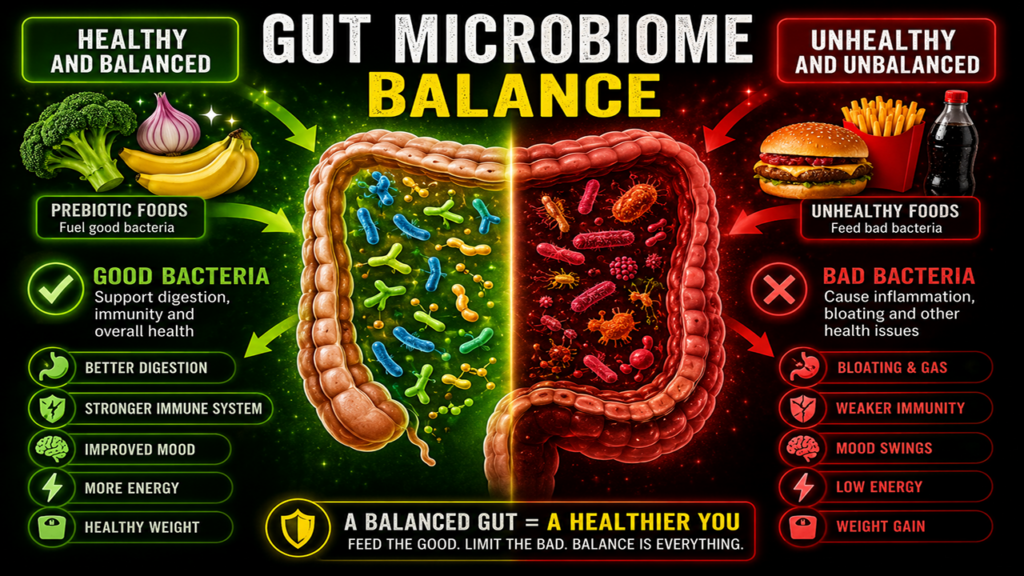
A useful analogy: your microbiome is like a complex neighborhood. If you feed it mostly ultra‑processed food and sugar, you’re inviting in the loud, disruptive neighbors. If you feed it fiber, polyphenols, and a variety of plants, you’re giving the quiet, helpful neighbors more space to thrive.
Over time, that shows up as:
More stable digestion
Better energy and mood
More resilient immunity
Daily Gut Basics (Before Any Supplement)
There are a few habits that consistently support gut health across studies:
More plants and fiber
Aim for a mix of vegetables, fruits, whole grains, beans, nuts, and seeds.
A simple target many experts use: 20–30+ different plant foods per week to increase microbial diversity.
Less ultra‑processed food and added sugar
Highly processed snacks, sugary drinks, and fast food can promote a less healthy microbiome and more inflammation.
Hydration, sleep, movement, and stress management
Water supports digestion and microbial balance.
Poor sleep and chronic stress both disrupt the gut–brain axis.
Regular movement (150+ minutes per week) is linked to better gut profiles.
You don’t need perfection; you need a direction. Once the basics are moving in the right direction, gut‑focused products can help more.
Morning Stack – Mushroom Coffee and Gut‑Friendly Starts
For many people, the day rises or falls on the first 90 minutes. A jittery coffee and a rushed breakfast set up crashes, cravings, and digestive irritation. A more thoughtful start can quietly change everything.
Why Mushroom Coffee Makes Sense for Some People
Traditional coffee is essentially caffeine plus antioxidants. Mushroom coffee blends take that base and add extract powders from functional mushrooms like lion’s mane, cordyceps, reishi, and others.
Brands such as RYZE emphasize benefits like:
Smoother, more stable energy (often with less caffeine per serving)
Support for focus and mental clarity (lion’s mane and similar nootropics)
Gut and immune support via beta‑glucans and other mushroom compounds
Less acidic, gentler experience for some people’s digestion
Mechanistically, the idea is simple:
You still get caffeine’s alertness effect.
You add adaptogenic and nootropic mushrooms that may support brain function and stress resilience.
You often avoid the sharp spike‑and‑crash pattern that comes with some coffee routines.
The evidence for mushroom blends is still emerging and varies by species, but the risk–reward profile is attractive for many adults, especially those who already drink coffee.
How to Use a Product Like RYZE as Part of a System
Instead of presenting mushroom coffee as a magic drink, frame it as a healthier default for people who already start the day with caffeine.
A simple way to do it:
Swap your usual morning coffee for one serving of mushroom coffee.
Pair it with a gut‑friendly breakfast—for example:
Greek yogurt or a protein shake plus berries and seeds
Oats with nuts, cinnamon, and a small amount of fruit
Pay attention to:
Energy and focus over 4–6 hours
Digestive comfort (bloat, reflux, urgency)
Mood and jitters
If someone likes the experience and their body responds well, that’s where a product like RYZE mushroom coffee earns a natural place in their daily stack.
You can then position RYZE or similar blends as:
“If you’re going to drink coffee anyway, this is a smarter version that gives you functional mushrooms and a smoother curve instead of extra jitters.”
If You Only Change Your Morning Routine
For many people, one small upgrade in the morning does more than five supplements at night. Here’s a simple start:
Swap your first coffee for RYZE Mushroom Coffee instead of adding more caffeine on top.Get this rhythm working for 2–4 weeks first. Once your mornings feel smoother, you can decide whether you actually need a nootropic or troche at all.

Building a Simple Daily Gut Support Stack
After the morning routine is stable, you can add targeted gut support on top of lifestyle changes.
Where Gut‑Support Supplements Fit
Supplements can’t fix a heavily processed diet, but they can support digestion and microbiome balance when used well. Common categories include:
Probiotics – live bacteria that may support microbial diversity and help certain digestive issues.
Prebiotics – fibers that feed beneficial microbes (for example, inulin, FOS, partially hydrolyzed guar gum).
Digestive enzymes – help break down components like fats, proteins, or lactase for lactose.
Herbal gut formulas – blends that combine soothing ingredients (like ginger, peppermint) with fibers and botanicals.
You can describe your preferred gut‑support product line (e.g., a comprehensive daily powder or capsule) as a convenient way to “top up” what someone is already doing with food.
A clear positioning statement might be:
“Think of this as a daily gut support base layer—fiber, targeted probiotic strains, and soothing botanicals—stacked on top of more plants, more movement, and better sleep.”
Focus & Calm: Where Nootropics and Troches Make Sense
Once gut basics and mornings are handled, we can talk about focus tools. Here, restraint matters. Nootropics and troches can help when used thoughtfully; they are not meant to be all‑day, every‑day crutches.
A Straightforward View of Nootropics
“Nootropics” is a broad label for substances that support aspects of brain function—memory, focus, alertness, and sometimes mood.
They range from:
Caffeine + L‑theanine combinations
Adaptogens and medicinal mushrooms (lion’s mane, rhodiola, ashwagandha)
Choline donors and amino acids
More aggressive synthetic compounds (which you should treat with more caution)
Mechanisms vary, but many nootropics work by:
Modulating neurotransmitters like dopamine, norepinephrine, or acetylcholine
Supporting blood flow and nutrient delivery
Reducing perceived stress or mental fatigue
Potential benefits are real, but so are side effects: insomnia, jitters, GI upset, and headaches are common when dosing or combinations are off.
How Troches Like Troscriptions Fit In
Troches, like those from Troscriptions—are lozenges designed to dissolve slowly and deliver ingredients through the oral mucosa. That can offer:
More gradual onset compared with some capsules
The ability to split doses (half or quarter troches)
Targeted combinations for focus, calm, sleep, or immune support
Different formulas aim at different outcomes, for example:
Focus / productivity troches – supporting attention, motivation, and working memory.
Calm / anti‑anxiety troches – supporting relaxation without heavy sedation.
Sleep troches – helping with onset or quality of sleep.
You can frame them like this:
“Troches are precision tools, not daily candy. You use them on purpose, at the right times, in the lowest effective dose.”
That’s where a Troscriptions product page or specific troche review can be linked logically from this hub.
Putting It Together – A Sample Day in the Life
This is where you turn mechanisms into a simple, real‑world rhythm. Make it clear this is an example, not a prescription.
Example Daily Flow (Adjust as Needed)
Morning
Glass of water and a short walk or light movement.
Mushroom coffee (for example, RYZE) instead of standard coffee.
Gut‑friendly breakfast with fiber and protein (oats with seeds, yogurt with berries, or a smoothie with greens and flax).
Late morning / early afternoon (work block)
If you have a high‑focus task and tolerate nootropics well, a focus‑oriented troche used sparingly (half or quarter) can be appropriate.
Keep caffeine intake modest and stop it early enough to protect sleep.
Afternoon / early evening
Movement: walk, training, or some form of activity.
Optional gut support supplement with a meal (as per product directions), especially if your diet is still a work in progress.
Evening
Simple, light dinner with plenty of plants and minimal ultra‑processed food.
Wind‑down routine: screens dimmed, maybe a calm‑oriented troche occasionally if you struggle to switch off, used in conversation with a professional when needed.
Aim for 7–9 hours of sleep, because none of the above works well if you consistently cut sleep short.
You can close this section by reminding readers:
“You don’t need to add everything at once. Start with better gut basics and one morning change. When that feels normal, layer in one focus or calm tool where it makes sense.”
How to Choose and Use These Tools Safely
People reading this page are serious enough to care, but they don’t want to get burned. This section protects them.
Smart Safety Principles
Talk to a professional if you have medical conditions, take medications, or are pregnant or breastfeeding before adding new supplements or nootropics.
Start low and slow with anything that affects mood, focus, or sleep, especially troches and stronger nootropics.
Avoid stacking multiple new brain‑active compounds at once; you won’t know what’s doing what.
Pay attention to sleep, digestion, mood, and blood pressure as feedback signals, not just productivity.
When to Get Professional Help
Supplements and stacks are not a substitute for evaluation if you have:
Persistent gut pain, bleeding, or major changes in bowel habits
Ongoing brain fog, low mood, or anxiety that doesn’t shift with basic changes
Severe insomnia or sleep disruption
In those cases, this page should point them toward a clinician, not just more products.
FAQs – Gut, Focus & Daily Support
Do I need a probiotic if I already eat a healthy diet?
Not necessarily. If you consistently eat a diverse, fiber‑rich diet with plenty of plant foods, sleep well, move regularly, and manage stress, you may not feel a major difference from adding a probiotic. Probiotics can be useful in specific situations (after antibiotics, during digestive upsets, or for particular conditions), but they work with, not instead of, foundational habits.
Is mushroom coffee better than regular coffee for gut health?
Mushroom coffee isn’t automatically “better,” but it can be a smarter choice for some people. Blends like RYZE typically offer less caffeine, added functional mushrooms, and a lower‑acid profile, which some individuals find easier on digestion and more stable for focus and mood. If regular coffee triggers reflux, jitters, or crashes, a trial swap is often worth testing.
Are nootropics and troches safe to take every day?
It depends on the specific product, dose, and your individual health. Many mild nootropics and mushroom‑based formulas have good safety profiles at recommended doses, but stronger stacks and stimulant‑heavy combinations can cause side effects, tolerance, or sleep disruption when used daily. Troches should be treated like targeted tools, use them intentionally, at the lowest effective dose, and cycle off regularly.
Can improving my gut health really affect my mood and focus?
Yes. The gut–brain axis is a two‑way communication network between your digestive system and your central nervous system. A healthier, more diverse microbiome is associated with better mood regulation, less systemic inflammation, and more stable energy, which indirectly supports focus and resilience. It’s not overnight magic, but many people notice meaningful changes over weeks and months.
What’s the best place to start if I feel overwhelmed?
Start with one gut‑friendly change to your food (more plants, more fiber) and one morning upgrade (for example, swapping to mushroom coffee or improving breakfast). When that feels normal, you can experiment with a gut‑support formula or a carefully chosen nootropic or troche, never all at once