Healthy Home Essentials
Most people try to “get healthy” from the outside in, new supplements, new workouts, new routines. The reality is simpler: if the water you drink, the air you breathe, and the cookware you use every day aren’t working for you, everything else is fighting uphill.
This guide gives you a clear, three‑step plan to fix that. First, you’ll lock in cleaner drinking and cooking water. Then you’ll improve the air in the rooms where you spend the most time. Finally, you’ll swap out the worst pans in your kitchen for safer, long‑term options. No overwhelm. Just three precise upgrades that quietly make your home, and your body work better.
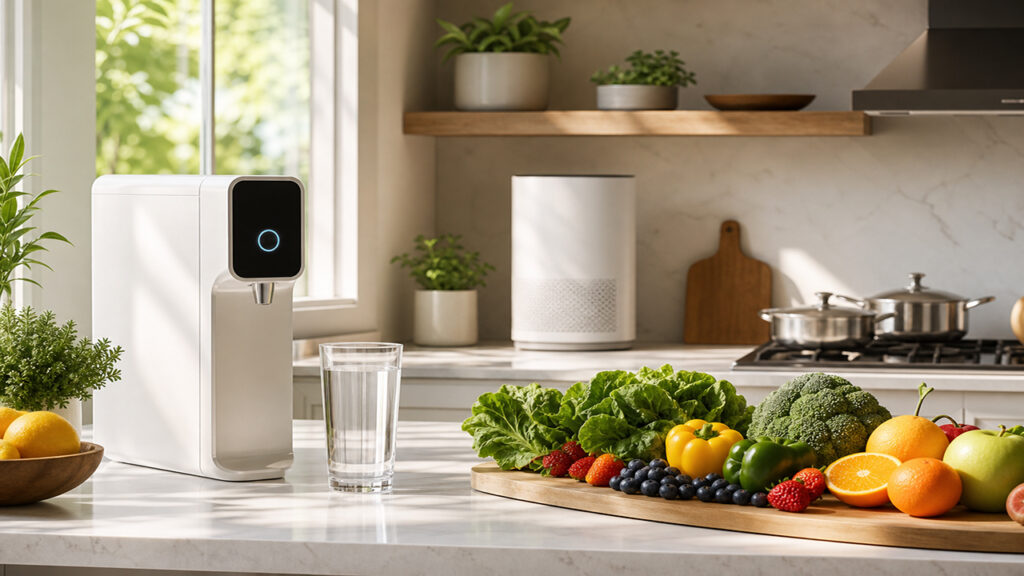
Start with the Water You Drink Every Day
If you drink from the tap, you are trusting that your local system, pipes, and fixtures are all working perfectly. In many places, they are doing the best they can—but water reports still show a mix of disinfectants, metals, and “forever chemicals” that you never actually signed up for.
The goal isn’t to scare you; it’s to give you a clear way forward.
Why Reverse Osmosis Becomes the Kitchen Workhorse
For most homes, a reverse osmosis (RO) system is the quiet workhorse upgrade that changes water from “I hope it’s fine” to “I know exactly what I’m drinking.”
RO forces water through a semipermeable membrane designed to strip out a wide range of dissolved solids and contaminants. Depending on the system and pre‑filters, that can include:
Heavy metals like lead and arsenic
Residual agricultural chemicals and industrial solvents
Many PFAS‑type “forever chemicals” in tested systems
Fluoride, nitrates, and other dissolved solids in some setups
You pay for that level of performance with a bit of water waste and the fact that RO also removes beneficial minerals. That’s why many higher‑end systems either include a remineralization stage or pair easily with trace‑mineral drops or low‑dose electrolytes.
For the reader, the promise is simple:
“Every glass of water you pour from this tap has been through the same deep filtration steps—no guessing, no ‘maybe.’”
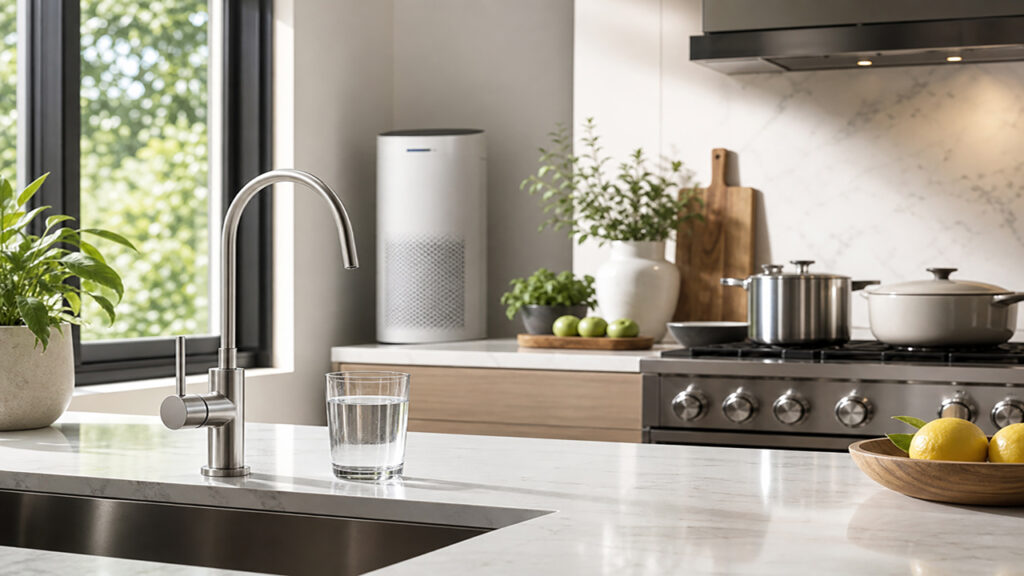
On this page, your main RO pick can be presented as the “best overall” option, with a short explanation of why: independent testing, solid build, clear filter‑replacement schedule, and real‑world reliability. Right beneath that, you can give a couple of mid‑range alternatives for people who want better water on a smaller budget.
What About Whole‑House Filtration?
Imagine showering in the same water you just decided not to drink. That is the gap whole‑house filtration tries to close.
Whole‑house systems are installed where water enters the home, so everything—showers, laundry, sinks—passes through some level of filtration. These setups are great for:
Reducing chlorine and sediment everywhere
Helping protect plumbing and fixtures
Making showers smell and feel better
They are not usually a replacement for a dedicated drinking‑water system. Many families end up with both: a whole‑house filter as a broad first line, and an RO or advanced under‑sink system specifically for water they drink and cook with.
If your budget is limited, start with the kitchen tap. You drink that water, boil with it, cook with it, and give it to kids and pets. Once that is handled, a whole‑house filter becomes an excellent second‑phase upgrade.
Breathe Easier: Bedroom and Living‑Room Air
We tend to think of pollution as something that lives outdoors, but modern homes trap a lot inside: dust, pet dander, pollen, cleaning chemicals, off‑gassing from furniture and flooring, and traffic or wildfire smoke that drifts in. If you wake up congested, or your eyes itch at home more than anywhere else, the air may be part of the story.
The good news is that fixing air is much more straightforward than it used to be.

Choosing a Purifier That Actually Fits the Room
Instead of chasing brand names, focus on three essentials:
True HEPA filtration to handle fine particles—dust, smoke, pollen, dander.
CADR (Clean Air Delivery Rate) that matches the size of the room you’re putting it in.
Activated carbon if you care about odors and some gases.
Tiny purifiers with optimistic claims often disappoint because they simply can’t move enough air. This page should help readers match device to reality:
A bedroom unit with strong CADR for 150–300 square feet, quiet enough to run all night.
A living‑room or open‑plan unit sized for the actual footprint, not the marketing copy.
Optional whole‑home style solutions or HVAC‑integrated filters for people ready to invest at that level.
Your recommendations can live right under each use case. “Bedroom pick,” “Large room pick,” and “Upgrade pick” are clear, non‑pushy labels that make it easy to compare options.
Low‑Tech Habits That Make a Big Difference
Devices help; habits multiply the effect. You can give readers a short checklist they can start today, whether they buy anything or not:
Use a vented range hood whenever you cook, especially on gas.
Open windows when outdoor air quality is good and the temperature allows.
Avoid heavy synthetic fragrances and aerosols indoors when possible.
Dust and vacuum regularly, using a vacuum with a sealed HEPA filter if you can.
When you combine those basics with a correctly sized purifier, indoor air starts to feel noticeably cleaner. Many people report fewer morning headaches, less congestion, and better sleep.
Safer Cookware: Ditch the Mystery Nonstick
Open most cupboards and you’ll find at least one pan with a scratched nonstick coating and no clear label about what it’s made from. That’s a problem when we’re talking about PFAS‑type chemicals that stick around in the body and the environment.
You don’t need a chef’s kitchen to cook safely. You just need a small set of pans made from materials that are proven, not mysterious.
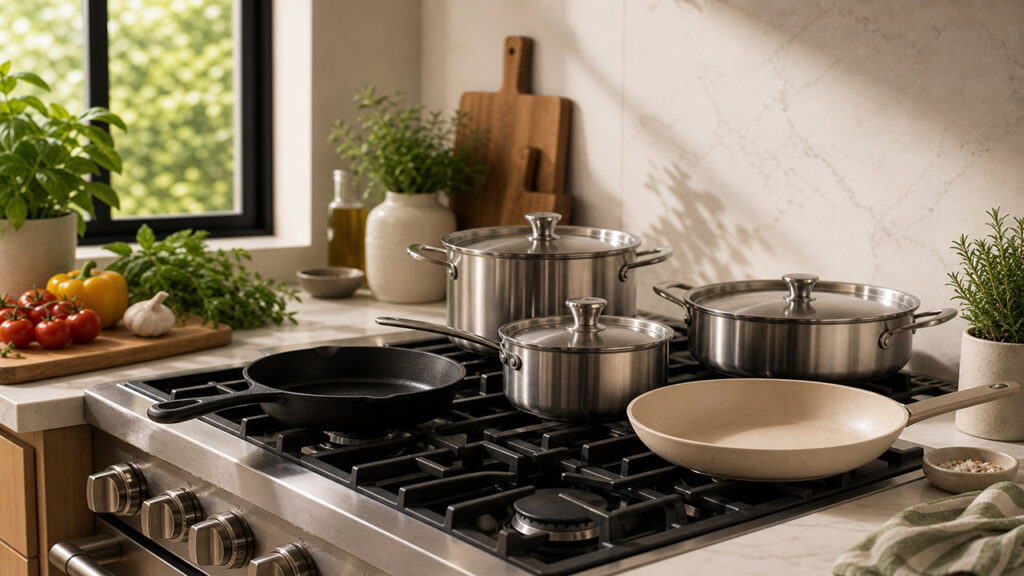
The Everyday Workhorses
Here’s how to frame the main choices for readers:
Stainless steel:
The “workhorse” material. It doesn’t rely on a coating for performance, it’s stable at high heat, and it can go from stovetop to oven. Yes, there is a short learning curve to keep things from sticking, but once you understand heat and oil, stainless becomes surprisingly forgiving.Cast iron and enameled cast iron:
Heavy, but worth the effort. A well‑seasoned cast‑iron skillet can last generations and handle searing, baking, and everyday frying. Enameled cast iron gives you many of the same benefits with easier cleaning and no seasoning step.Ceramic and PFAS‑free nonstick:
These pans are designed for people who really want that “nothing sticks” feeling without traditional PFAS‑based coatings. The key is to choose reputable brands that clearly state what their coatings are made of and how to care for them. Treat these pans like you would treat tires: they have a finite lifespan and are best reserved for eggs, pancakes, and other delicate foods.
You can recommend a small “capsule” setup:
One stainless or enameled steel set as the backbone.
One cast‑iron or enameled Dutch oven for soups, stews, and bread.
One ceramic or PFAS‑free nonstick skillet purely for low‑and‑slow, delicate work.
That combination covers almost everything a home cook needs while greatly reducing exposure to questionable coatings.
Other Smart Healthy‑Home Upgrades
Once water, air, and cookware are headed in the right direction, smaller changes can round out the picture.
Thoughtful additions to mention:
Water quality test kits so you can see what changed before and after installing filtration.
Humidifiers or dehumidifiers to keep indoor humidity roughly in the 40–60% zone—dry air can irritate airways, and too much moisture can encourage mold.
Bedroom environment: blackout curtains, softer evening lighting, and managing device light can improve sleep quality, which amplifies every other health habit.
Food storage: moving toward glass containers and avoiding heating food in disposable plastic when possible.
None of these require a complete lifestyle overhaul. They’re small, cumulative improvements that make home feel more like a place where your nervous system can exhale.
How to Prioritize Without Getting Overwhelmed
If everything in this guide sounds good but your budget (or energy) says “not happening,” give readers a clear, realistic order of operations. For example:
Fix the water you drink and cook with.
Start with an RO or advanced under‑sink system at the kitchen tap. You use it dozens of times a day.Improve the air where you sleep.
Add a properly sized HEPA purifier to the bedroom before worrying about every other room.Replace the worst cookware first.
Retire peeling, mystery nonstick pans and swap in one or two safer pieces that you reach for every day.Layer in the rest over the next 6–12 months.
Whole‑house filtration, extra air purifiers, better food storage, and bedroom upgrades all become easier once the core three are handled.
This keeps the path practical. They don’t need to fix the entire house in a weekend. They just need the next right step.
FAQs – Healthy Home Essentials
Q: Is reverse osmosis water “too pure” to drink every day?
RO water is very low in minerals because the system removes dissolved solids along with contaminants. That doesn’t make it harmful by itself, but it does mean you’ll want to bring minerals back in—through a remineralization filter stage, trace‑mineral drops, electrolyte packets, or simply a nutrient‑dense diet. Anyone with specific health conditions should check with their clinician, but for most people, RO plus sensible remineralization is a solid long‑term approach.
Q: If I install a whole‑house filter, do I still need a dedicated drinking‑water system?
In most cases, yes. Whole‑house filters are excellent for chlorine, sediment, and broad improvements across all taps, but they typically don’t match a good RO system for removing a wide range of dissolved contaminants. Many households use a whole‑house filter plus an RO or under‑sink unit in the kitchen so showers and laundry improve and drinking water gets extra protection.
Q: Do I need air purifiers in every room?
No. Start where it matters most. For most people that means the bedroom, because you spend a large, continuous block of time breathing that air every night. After that, your main living area is usually next in line. Make sure the purifier you choose has enough CADR for the square footage and keep up with filter changes so it can do its job.
Q: Is all ceramic or PFAS‑free nonstick safe?
“Ceramic” and “PFAS‑free” are broad marketing labels, not precise material names. They’re generally a step in the right direction compared with older PFAS‑heavy coatings, but the details still matter. Buy from brands that clearly explain what their coatings are made from, how to care for them, and what tests they’ve passed. Use nonstick on medium or low heat, avoid metal utensils, and replace pans once the surface degrades.
Q: I’m on a tight budget. What’s the single best place to start?
If you can only change one thing right now, start with the water you drink and cook with. A well‑chosen under‑sink or countertop system that you actually use every day will do more for you than a closet full of gadgets you never touch.